STAT 80B Week 2 - Tuesday
10 Mar 2026
Quick question: What makes a good map?
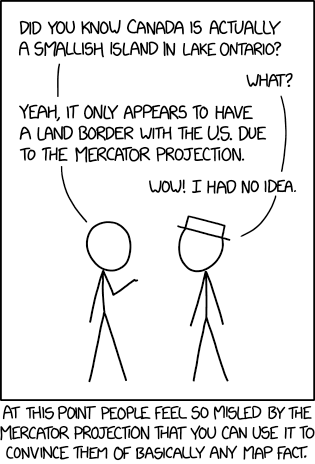
Greenland looks HUGE on some maps but tiny on others. Why?
We’re learning the “rules of the grid”:
Real consequences: These choices change what story your data tells!
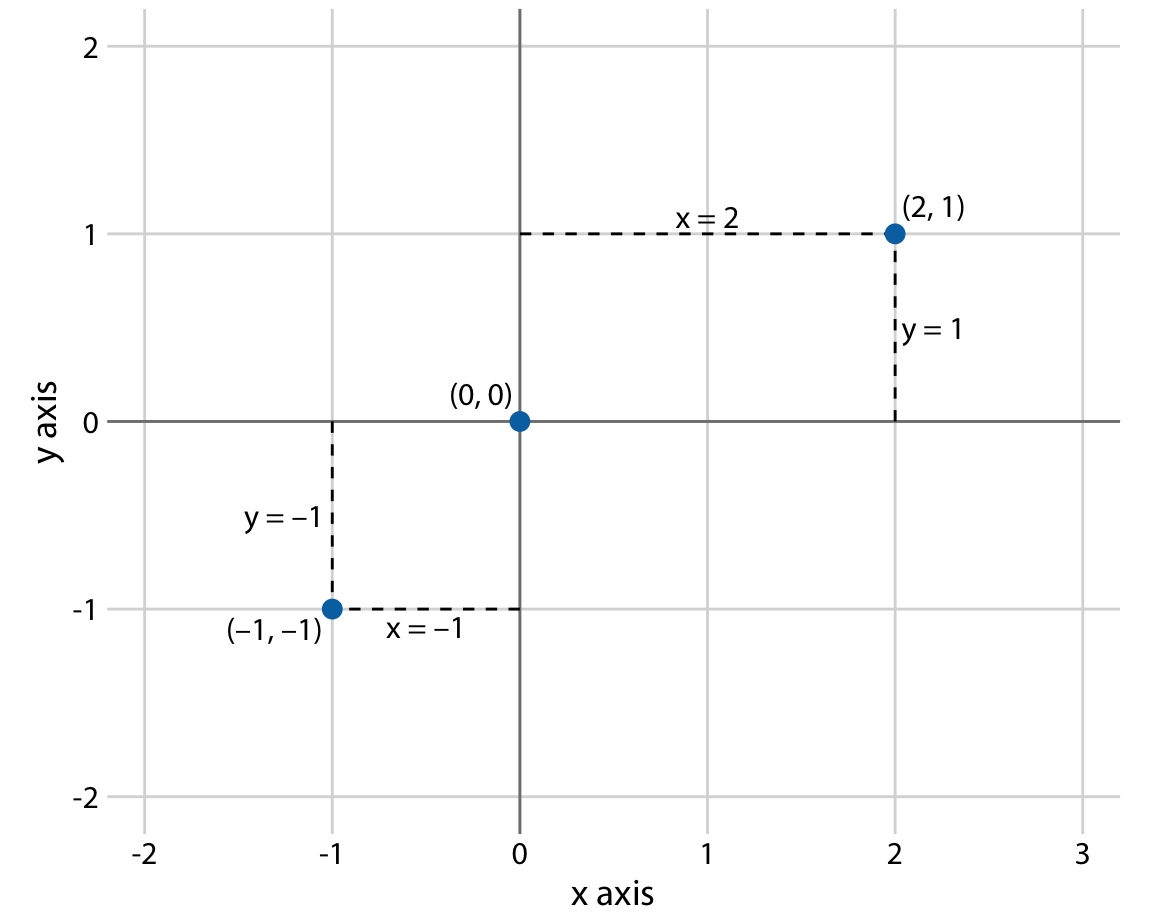
Remember Graphing in K12?
The x-y grid you learned is called a Cartesian coordinate system.

Scenario: You’re visualizing monthly temperature over a year.
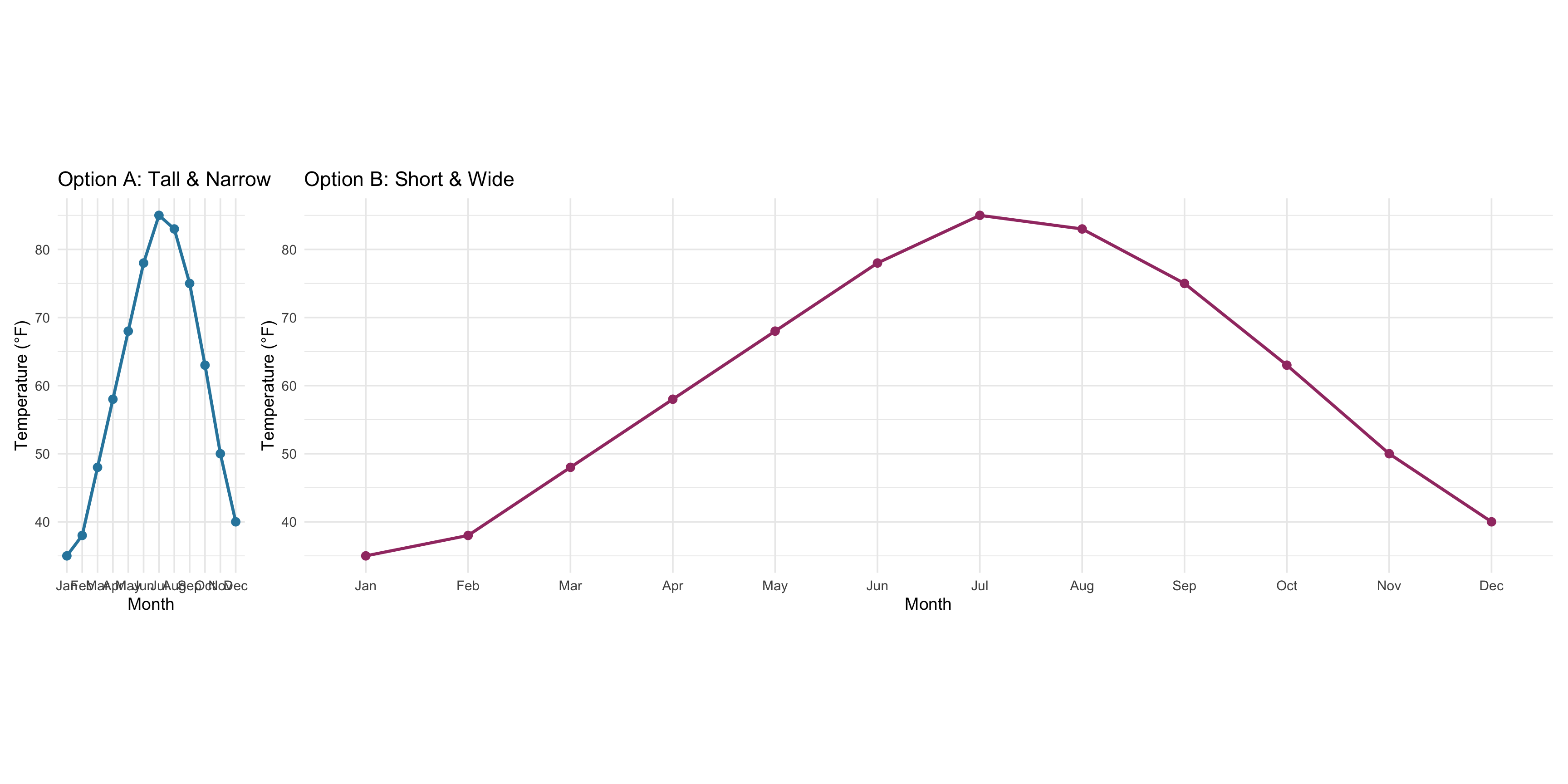
Discuss: What story does each shape tell? Which would you use and why?
Aspect ratio (height vs. width) affects the message:
💡 Key lesson: There’s no single “correct” shape—choose based on your message.
A Problem: Wildly Different Sizes
Imagine plotting city populations:
On a regular grid, the small town would be invisible! 😟
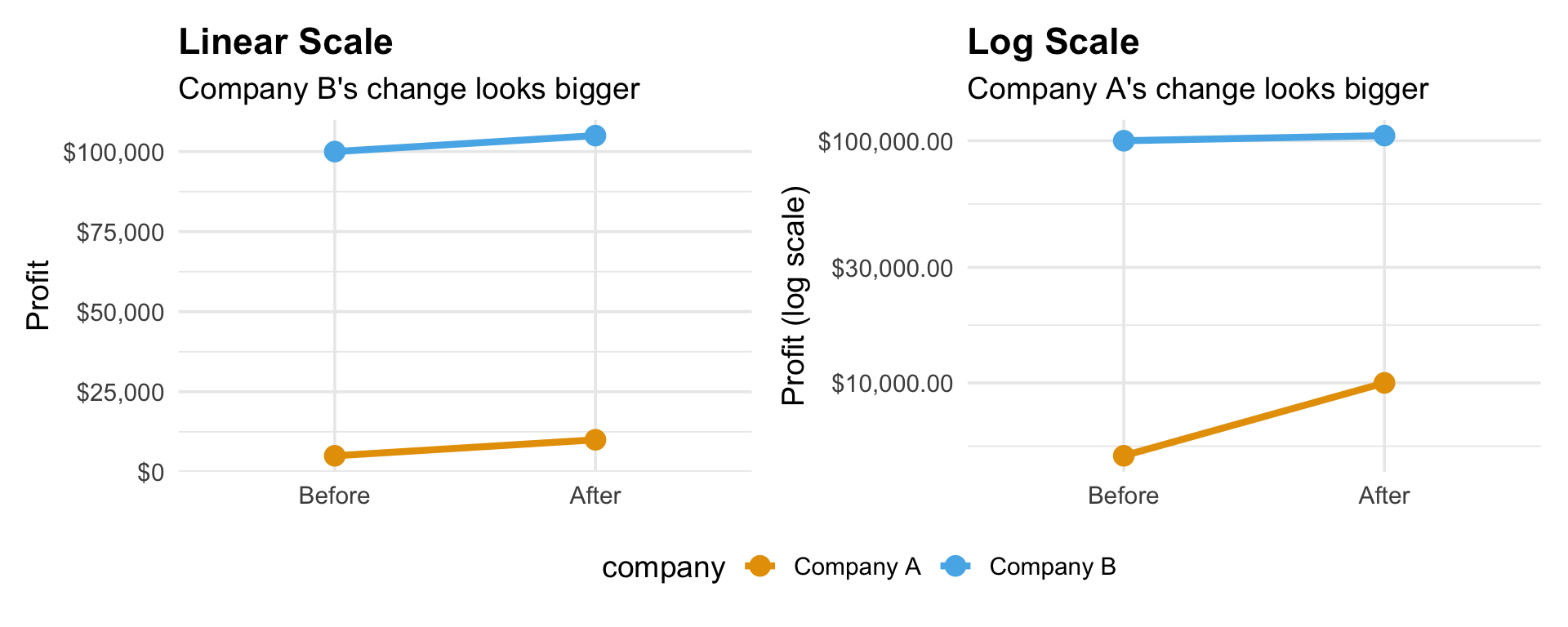
Linear (Regular) Scale:
0 — 1,000,000 — 2,000,000 — 3,000,000
Equal differences are equal distances
Adding 1M always moves the same distance →
Logarithmic (Log) Scale:
1 — 10 — 100 — 1,000 — 10,000
Equal ratios are equal distances
Multiplying by 10 always moves the same distance →
You’re comparing:
Discuss: Which scale is “fairer” for comparing growth? Why?
Use LINEAR when:
Use LOG when:
You CANNOT put zero or negative numbers on a log scale.
If your data has zeros, use a linear scale (or add a tiny amount like 0.001).
Stand up, stretch, grab water!
Not Everything Fits on a Grid Some data is naturally circular:
Polar coordinates use angle + distance instead of x and y.
Instead of (x, y), you specify:
Example:
This creates circular plots! Perfect for cyclical patterns.
Scenario: You track when you feel most productive during the day.
Data: 6 AM (low), 10 AM (high), 2 PM (medium), 6 PM (low), 10 PM (medium)
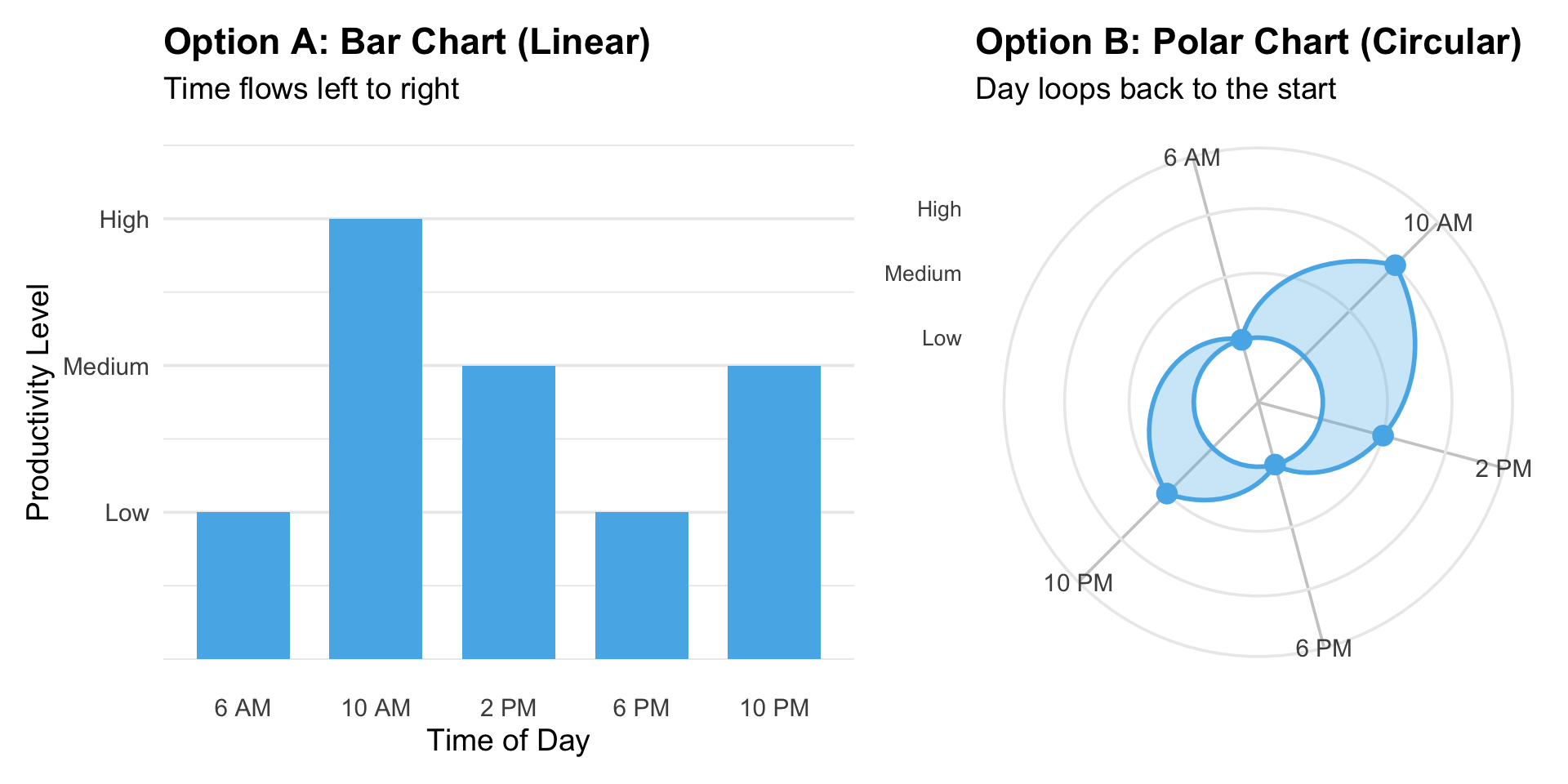
Discuss: Which shows that your day “loops” back to the start? Why might polar be better here?
Great for:
Avoid when:
The Impossible Challenge
Problem: Earth is a 3D sphere. Paper/screens are 2D.
To make a flat map, you have to distort something:
The most common world map (Mercator) preserves angles but distorts size:
This projection was designed for ship navigation, NOT for comparing areas!
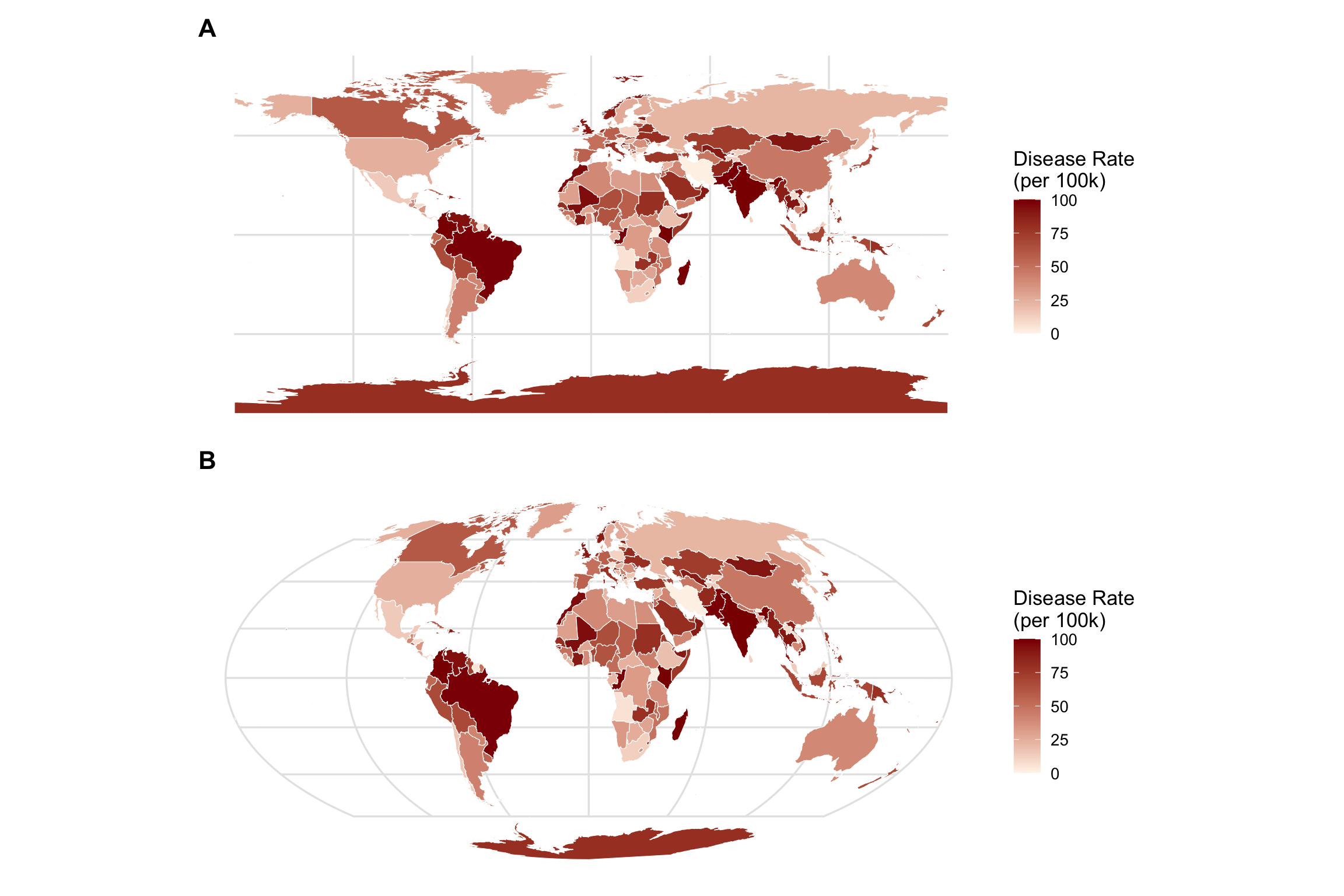
Here are two maps showing:
Identify which one is:
You can use ALL resources available online. Don’t try to draw the map based only on your memory :)
Discuss: Which would mislead your audience? Why does it matter if Greenland looks huge when it has few people?
For data visualization:
💡 Bottom line: Don’t accidentally make Greenland look more important than it is!
Every choice you make changes the story:
You’re not just making graphs—you’re making arguments with data!
Read: Wilke Chapter 4 (Color)
Preview question to think about:
Why do some color combinations work better than others? What colors would you never use together?
I’ll be here if you have any questions :)

![]()
STAT 7 – Winter 2026